
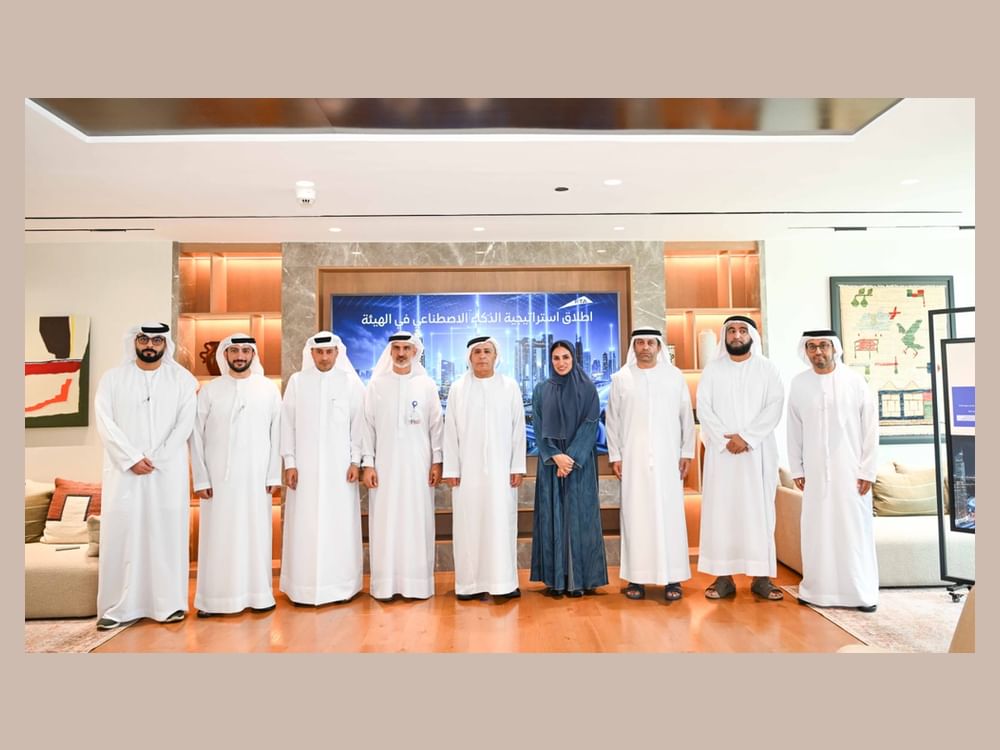
DUBAI, 1st November, 2026 (WAM) -- Mattar Al Tayer, Director-General and Chairman of the Board of Executive Directors of the Roads and Transport Authority (RTA), has launched RTA’s updated Artificial Intelligence (AI) Strategy to reinforce its global leadership in AI-powered mobility.
The strategy aims to establish an integrated, interconnected ecosystem that harnesses advanced technologies to enhance transport and mobility services, improve traffic flow, elevate customer experience, and boost operational and corporate efficiency. These efforts will contribute to enhancing quality of life in Dubai and consolidating its position as a leading global city in adopting future technologies and harnessing them to serve people.
The strategy spans 41 areas across RTA’s agencies, sectors and departments. The first two rollout waves focus on 11 business areas, including the development of 40 AI products, 11 of which have already been completed, alongside four foundational projects. Over a two-and-a-half-year implementation period, the strategy aims to generate more than AED300 million in annual added value and transition 50 percent of operations and services to an Agentic AI ecosystem, enabling RTA to deliver smarter, faster and more flexible services.
Al Tayer said, “The launch of RTA’s updated Artificial Intelligence Strategy aligns with the directives of the wise leadership to accelerate AI adoption, expand its use across government sectors, reinforce Dubai’s position as a global hub for developing and deploying smart, innovative solutions, and develop human-centred services that promote happiness and wellbeing.”
He added, “The strategy marks an advanced stage in RTA’s digital transformation journey, paving the way for a fundamental shift from AI applications that support operations to intelligent systems capable of analysing data, predicting outcomes, supporting decision-making and delivering end-to-end services. Through this strategy, we aim to expand the use of future technologies in planning, operating and managing road and public transport networks, while developing proactive, personalised services that meet customer needs, save time and effort, and make mobility easier. These efforts will contribute to enhancing quality of life and bringing happiness to Dubai’s residents and visitors.”
Al Tayer emphasised that investing in AI is an investment in Dubai’s future and global competitiveness. He noted that RTA is focused on building an integrated corporate ecosystem that brings together advanced technologies, data, qualified talent and strategic partnerships to boost productivity, optimise resource utilisation, accelerate transaction processing and develop innovative solutions to future challenges. These efforts will support the sustainability of the transport network, while keeping pace with Dubai’s rapid population growth and urban and economic expansion.
The strategy covers 11 key business areas in its first two implementation waves: Planning and Business Development, Vehicle Licensing, Right-of-Way, Traffic, Contracts and Procurement, Customer Happiness, Bus Operations and Maintenance, Driver Licensing, Roads, Roads and Facilities Maintenance, and Human Resources and Development.
It sets out a range of key performance targets, including reducing traffic congestion by 3 percent to 5 percent, cutting case and complaint processing times by 20 percent to 30 percent, reducing waiting times at Customer Happiness Centres by 14 percent to 16 percent, and shortening service delivery times at these centres by 15 percent to 20 percent. Further targets include reducing accidents involving newly licensed drivers by 10 percent to 20 percent, shortening procurement cycles by 10 percent to 15 percent, and achieving savings of 10 percent to 15 percent in operational and engineering working hours.
Ahmed Hashem Bahrozyan, CEO of RTA’s Corporate Technology Support Services Sector, highlighted the key achievements delivered under the strategy to date. These include completing the first-wave planning, identifying more than 180 use cases and quick-win initiatives across 11 business areas, involving 12 implementing departments, and identifying 40 products. RTA has also launched 11 AI products, including five in Planning and Business Development, five in Vehicle Licensing, and one in Right-of-Way.
He said, “Key achievements include expanding the use of Microsoft Copilot among RTA employees, with active usage exceeding 90 percent among its users and delivering a 10 percent saving in working time. AI adoption has also supported employees in performing their tasks more efficiently, accelerating task completion and boosting corporate productivity. Other achievements include submitting 34 works for intellectual property registration, obtaining approval for the ‘Rail AI Chatbot’ work, and winning the AI World Series 2026 Award. RTA has also developed eight strategic initiatives in collaboration with global technology partners, including Huawei, Boston Consulting Group and Microsoft.”
Bahrozyan added, “The strategy includes a range of high-impact initiatives and AI products designed to transform service delivery and operational management. Key initiatives include upgrading Mahboub smart chatbot into a platform capable of delivering end-to-end services, the Agentic AI-powered No Objection Certificate System, the Intelligent Licensing Document Audit System, the Outsourcing Contracts Accountant, and the Agentic AI-powered Bus Network Planner.”
Among the key initiatives is the upgrade of Mahboub smart chatbot using Agentic AI technologies, transforming it from a platform that responds to customer enquiries into an intelligent system capable of completing transactions and delivering end-to-end services through RTA’s app, website and WhatsApp. The upgraded system enables customers to complete five vehicle licensing services entirely through the platform and access approximately 100 information services. Integration with UAE PASS and Dubai Pay allows vehicle-related transactions to be completed in less than five minutes, providing customers with a seamless, integrated service experience.
The project aims to double the speed of service delivery and increase the proportion of services delivered through the platform to 10 percent by the end of 2026 and 50 percent by the end of 2027, further advancing the shift towards Agentic AI-powered government services.
The initiatives also include the Agentic AI-powered electronic No Objection Certificate (eNOC) System, developed by the Traffic and Roads Agency in collaboration with the Corporate Technology Support Services Sector to expedite the review of NOC applications for works and projects near RTA assets.
The system harnesses AI technologies to guide customers through the application process, conduct preliminary checks of submitted documents against approved procedures, and provide approving entities with engineering insights to support reviews and decision-making. The service issues approximately 130,000 certificates annually, with demand growing by around 11 percent. The system aims to accelerate review procedures threefold, save more than 700,000 days annually, improve customer satisfaction by over 5 percent, and increase revenues by 5 percent to 10 percent.
In the area of regulatory oversight, the initiatives include the Agentic AI Auditor, developed by the Licensing Agency in collaboration with the AI and Data Science Centre. The system uses machine learning and optical character recognition to audit licensing documents, detect anomalies, recommend corrective actions and maintain a comprehensive record of audit operations.
The system aims to accelerate auditing processes by up to 21 times, expand coverage from sample-based auditing to 100 percent of documents within its scope, and save more than 25,000 hours of manual work annually. Covering seven priority services, the initiative will enhance the quality, accuracy and efficiency of auditing procedures.
The initiatives also include the Outsourcing Contracts Accountant, developed by the Finance Department in collaboration with the AI and Data Science Centre. Powered by Agentic AI, the system conducts monthly reviews of outsourcing contracts before payment approval, analysing attendance records and work outputs, verifying compliance with contractual terms and streamlining invoice reviews.
In public transport, the initiatives include the Agentic AI-powered Network Planner, implemented by the Public Transport Agency in collaboration with the AI and Data Science Centre. The project deploys approximately 20 AI agents to support planners in assessing and developing Dubai’s bus network.
The system analyses performance indicators, identifies service gaps, simulates operational alternatives and recommends the most suitable options for network development, enabling data-driven planning decisions supported by advanced analytics.
The project aims to accelerate analysis and assessment processes fivefold, reduce the time required to implement service changes from approximately 60 to 48 days, improve on-time performance by up to 10 percent, and increase the cost recovery ratio by 3 percent to 7 percent. These improvements will enhance the bus passenger experience and make public transport more attractive.
The strategy places particular emphasis on developing workforce and corporate capabilities and strengthening employees’ readiness to harness AI technologies across different business areas. This includes expanding the use of intelligent tools, developing specialised expertise and fostering a culture of innovation and continuous learning to sustain the transformation and maximise the benefits of advanced technologies.
The strategy marks another milestone in RTA’s journey towards building a smarter, more sustainable mobility ecosystem capable of meeting Dubai’s future needs, reinforcing integration across transport networks, enhancing customer experience and supporting the emirate’s strategic direction towards harnessing advanced technologies to serve the community and enhance quality of life.